Countries: AR-Argentina , BR-Brazil, DE-Germany, FR-France, IT-Italy, MX-Mexico, NL-Netherlands, RU-Russia, SP-Spain, SW-Switzerland, UK-United Kingdom , US- United States, VE-Venezuela                           

Magic Realism - A Time Capsule  

  ~   Use the Blue Scroll Bar Below to Move the Timeline


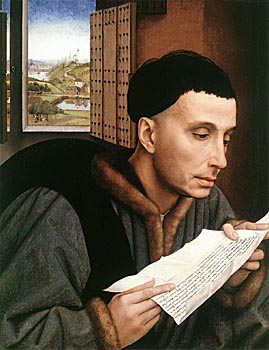
St. Ivo (c 1450)
by Roger van der Weyden (Flemish)


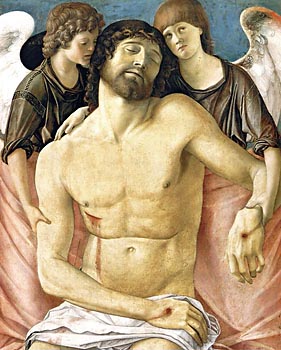
Pieta (c 1470-75)
by Giovanni Bellini (IT)


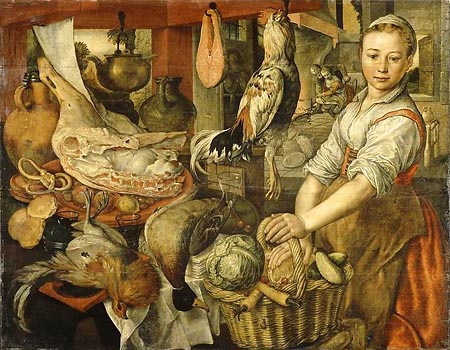
Kitchen Interior (c 1580-85)
by Joaquin Beuckelaer (Flemish)


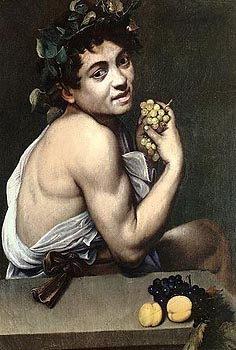
Young Sick Bacchus (c 1593)
by Caravaggio (IT)


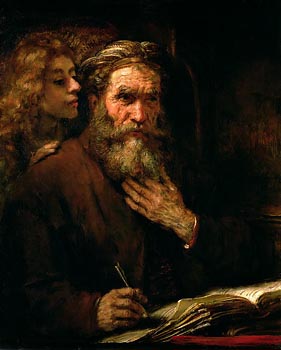
St. Matthew and The Angel (1655-60)  by Rembrandt van Rijn (NL)


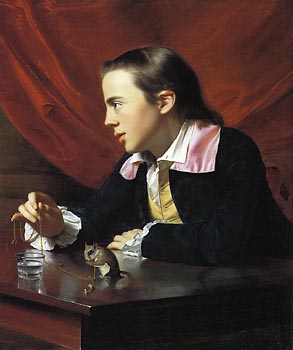
Boy with a Squirel aka Henry Pelham (1760) by John Singleton Copley (US)


The Spanish Singer (1860)
by Eduard  Manet (FR)


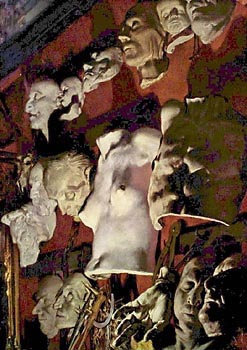
Studio Wall (1872)
by Adolf von Menzel (DE)


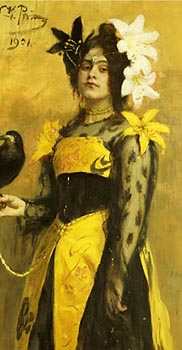
Lady in Yellow (1901)
by Ilya Repin (RU)


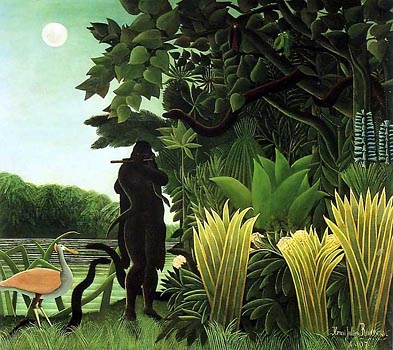
The Snake Charmer (1907)
by Henri Rousseau (FR)


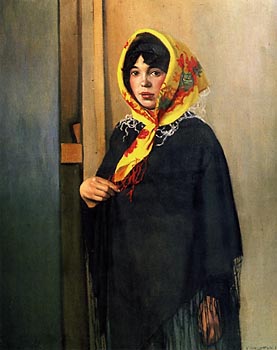
Young Woman with Yellow Scarf (1911) by Felix Vallotton (FR)


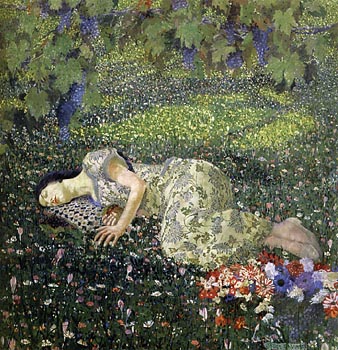
The Dream (1912-13)
by Felix Casorati (IT)


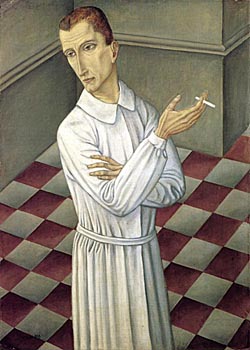
The Surgeon (1913)
by Ubaldo Oppi (IT)


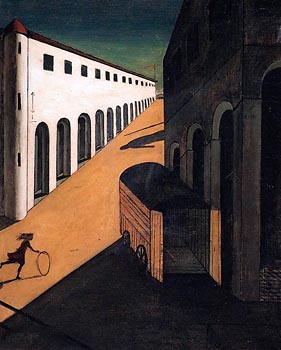
Mystery and Melancholy on a Street (1914) by Giorgio de Chirico (IT)


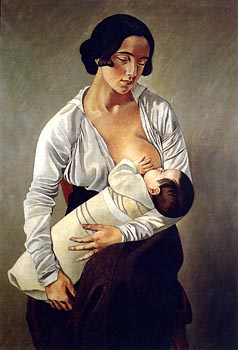
Motherhood (1916)
by Gino Severini (IT)


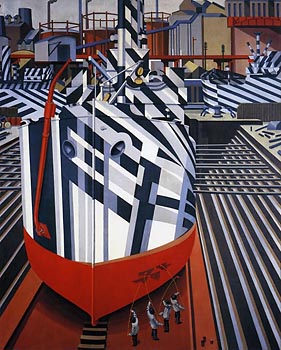
Dazzle Ships in Drydock at Liverpool, (1919) by Edward Wadsworth (UK)


The Black-Marketeer (1920-21)
by  Heinrich Maria Davringausen (DE)


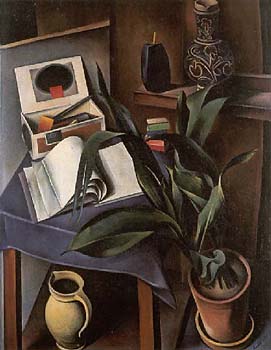
Stilleben II (1922) by Alexander Kanoldt   (DE)

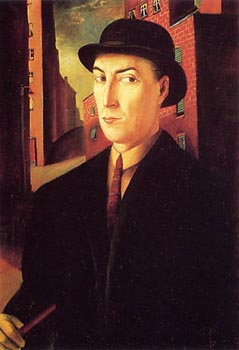
  Heinrich Maria Davringhausen (1922) by Carli Mense (DE)  

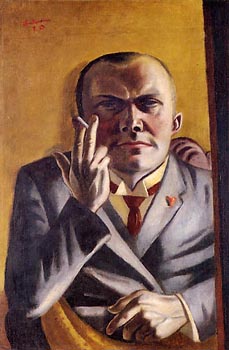
Self-Portrait with a Cigarette
(1923) Max Beckmann (DE)


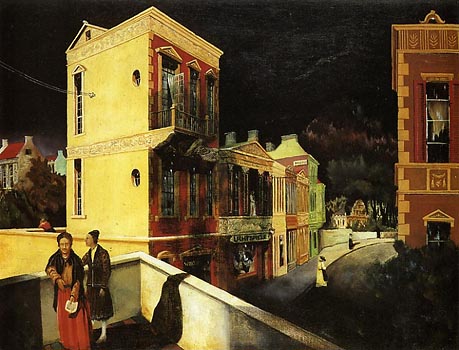
Zwei Frauen auf dem Balkon (1923)
by Franz Radziwill (DE)


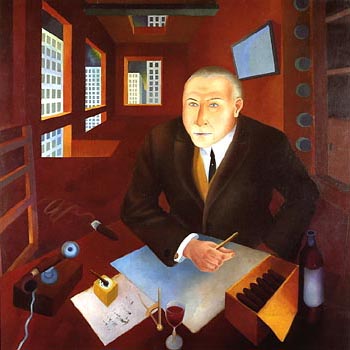
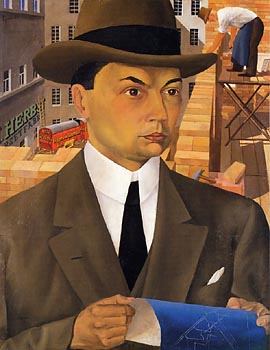
Portrait eines Architekten (1923)
by Wilhelm Schnarrenberger (DE)


Le retour de la Mer / Back from the Sea (1924)
by Felix Vallotton (FR)


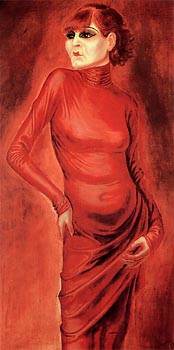
Anna Berber (1925)
by Otto Dix (DE)


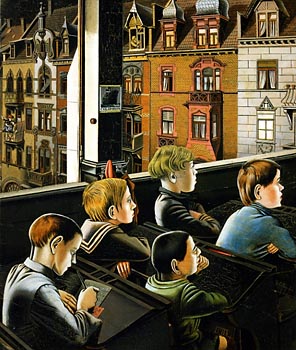
Schoolroom (1925)
by Karl Hubbuch (DE)


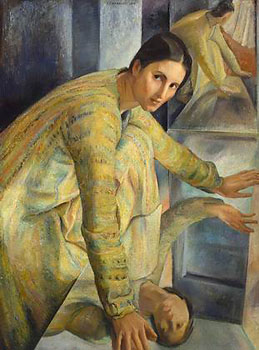
Orizia agli specchihe (1925)
by Ferruccio Ferrazzi (IT)


Bildnis Toni Overbeck ( 1926)
Gerta Overbeck (DE)


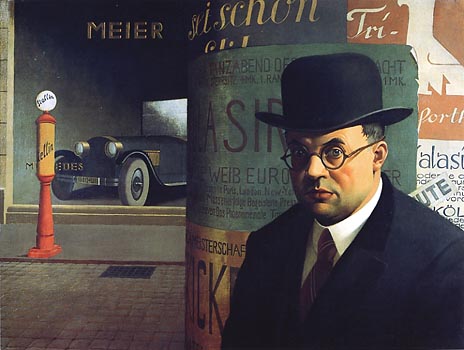
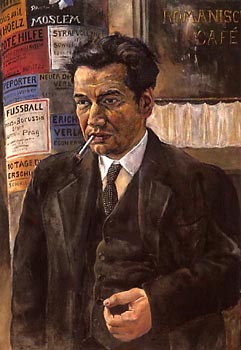
Self in Front of an Advertising Column (1926)
by Georg Scholz (DE)


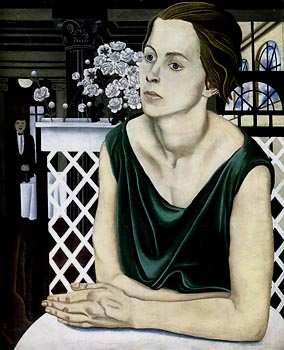
Marcella Schad (1926)
by Christian Schad


John Foerate, Man with Glass Eyes
(1926) by George Grosz (DE)


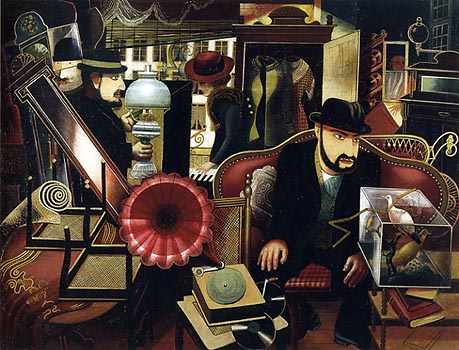
Troedelladen (1926)
by Ernst Thoms (DE)


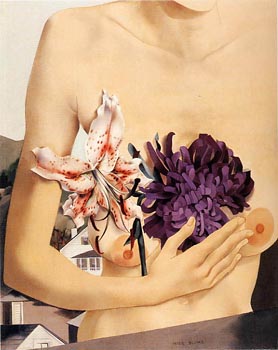
Flower and Torso (1927)
by Peter Blume (US)


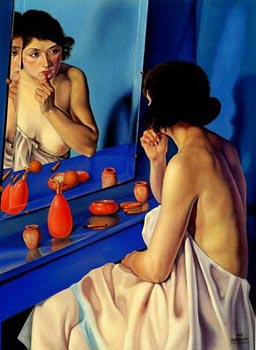
Donna allo Specchio (1927)
by Cagnaccio di San Pietro (IT)


Memories of the Past
(1927) by Ivan Albright  (US)


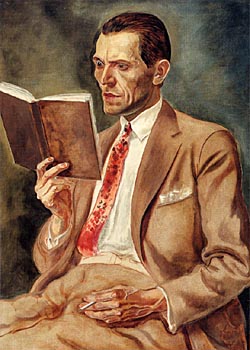
Portrait of Egon Erwin Kisch (1928) by Rudolf Schlichter (DE)


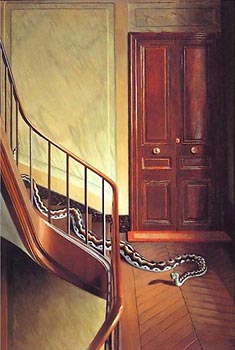
Danger on the Stairs (1927-28)
by Pierre Roy (FR)


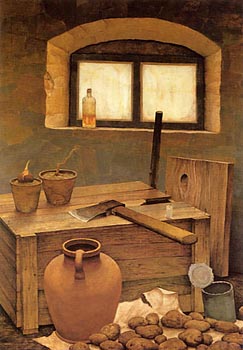
Cellar Still Life (1929)
by Franz Lenk (DE)


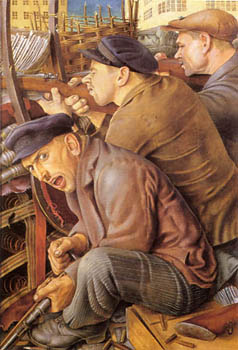
Ruhr Battle (1930)
by Barthel Gilles (DE)


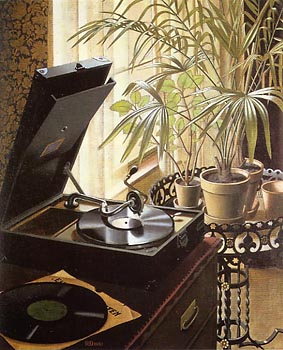
Gramaphone (1930)
by Rudolf Dischinger (DE)


Arnold Comes of Age - Portrait of Arnold Pyle (1930) by Grant Wood  (US)


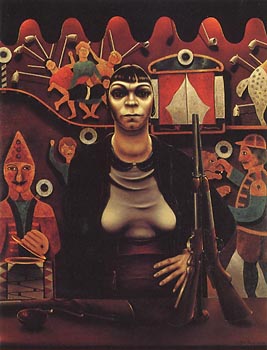
Shooting Gallery ( 1931)
by Pyke Koch (NL)


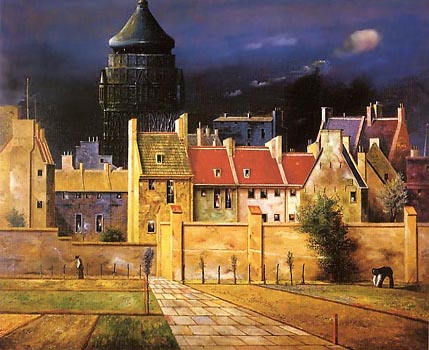
Water Tower in Bremen (1931)
by Franz Radziwill (DE)


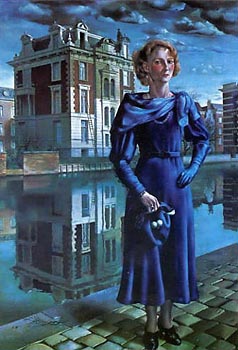
Wilma (1932)
by Carel Willink (NL)


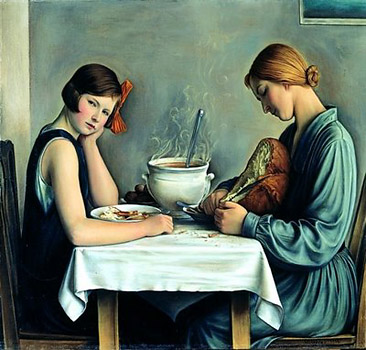
La Tailleuse de Soupe (1933)
by François-Emile Barraud (SW)


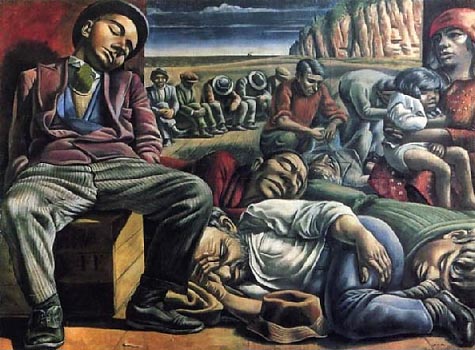
Desocupados (1934)
by Antonio Berni (AR)


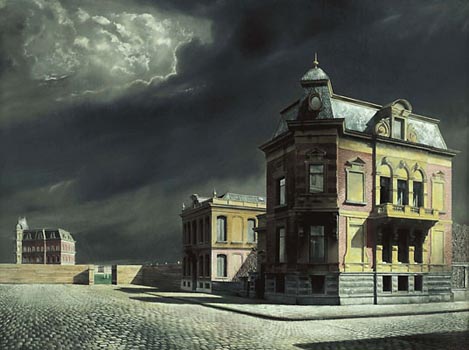
Stadsgezicht - Townscape (1934)
by Carel Willink (NL)


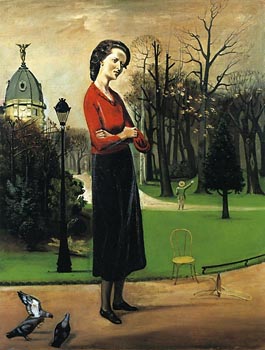
Lelia Caetani (1935)
by Balthus (FR)


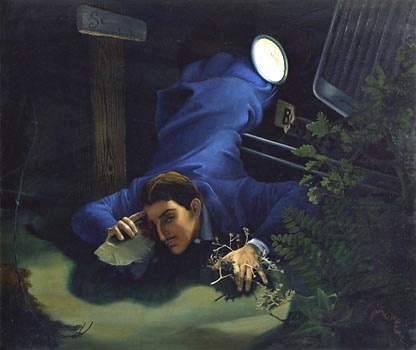
Accidente (1936)
Alfonso Ponce de Leon (SP)


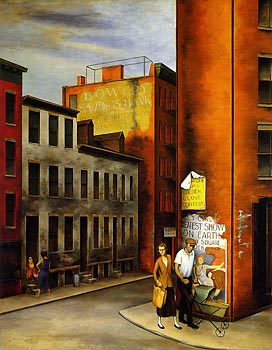
View in Chambers Street (1936)
by O Louis Guglielmi  (US)


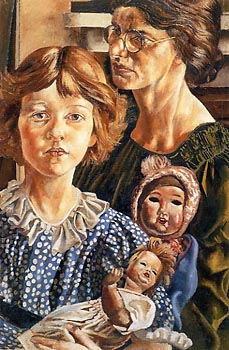
Hilda, Unity and Dolls (1937)
by Stanley Spencer (UK)


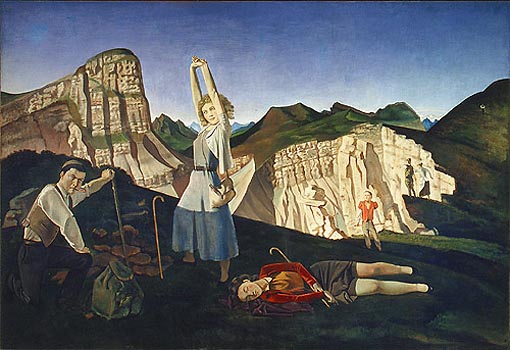
The Mountain (1937)
by Balthus  (FR)


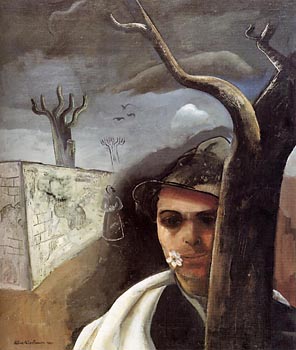
Self-Portrait with Apple Blossum (1939)
by Felix Nussbaum  (DE)


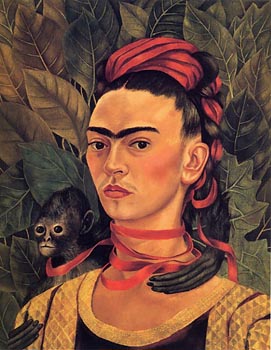
Self Portrait with Monkey (1940) by Frida Kahlo  (MX)


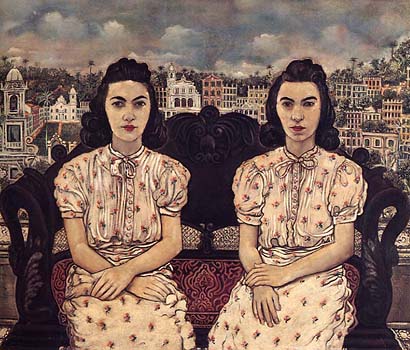
Lee e Maura (1940)
by Alberto de Veiga Guignard  (BR)


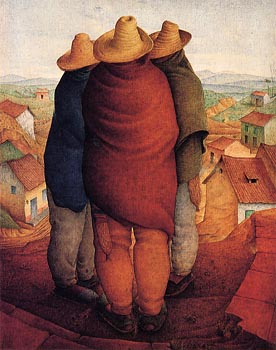
Los Comisarios (1942)
by Hector Poleo (VE)


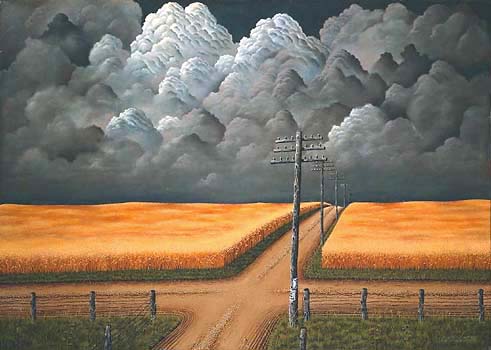
The Gray and Gold (1942)
by John Rogers Cox  (US)


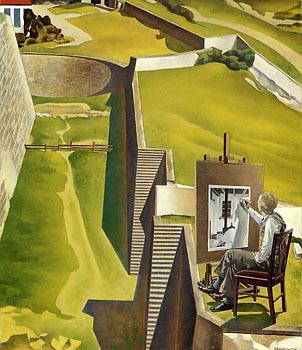
The Artist Looks at Nature (1943)
by Charles Sheeler  (US)


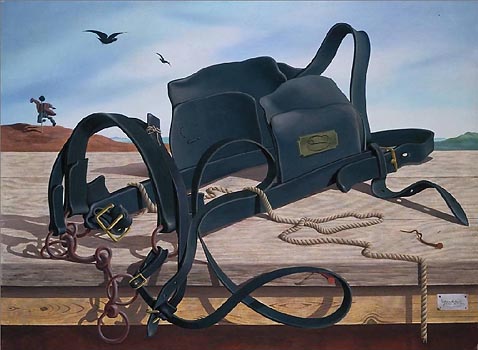
The Bridle (1943)
by Tristram Hillier  (UK)


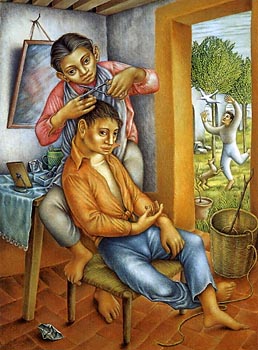
El Peluquero Zurdo (1949)
by Emilio Baz Viaud  (MX)


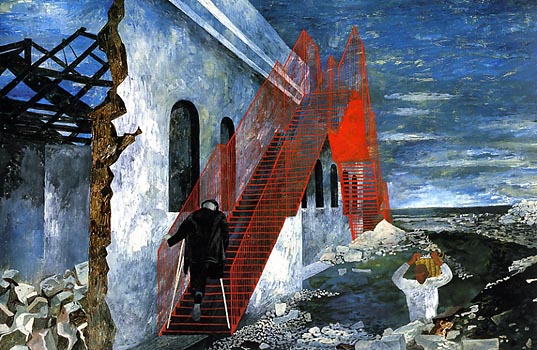
The Red Stairway (1944)
by Ben Shahn  (US)


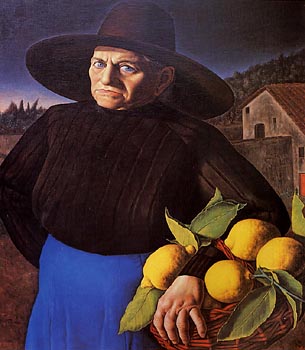
Donna con i limoni (1947)
by Giovanni Acci  (IT)


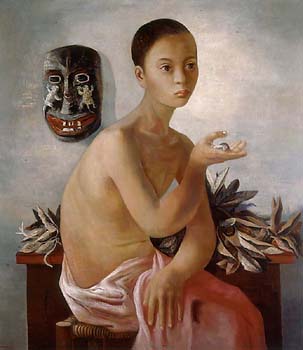
El filósofo (1948)
by Jesus Guerroro Galvan  (MX)


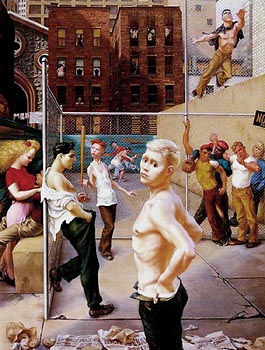
Playground (1948)
by Paul Cadmus   (US)


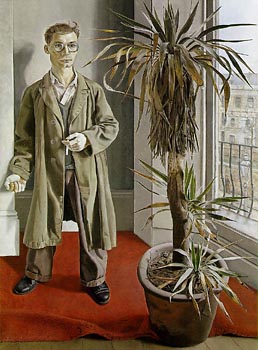
Interior in Paddington (1951)
by Lucien Freud  (UK)


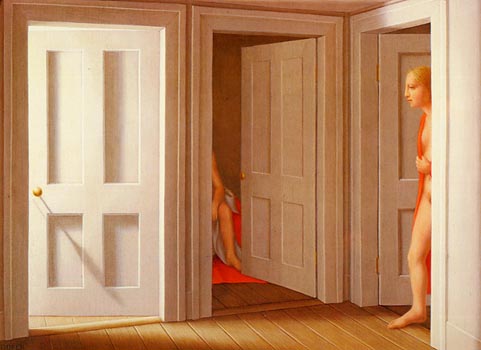
Doors (1953)
by George Tooker  (US)


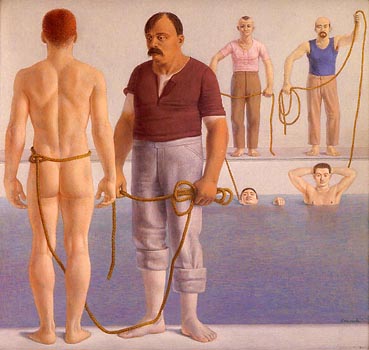
The Rope  (1954)
by Jared French (US)


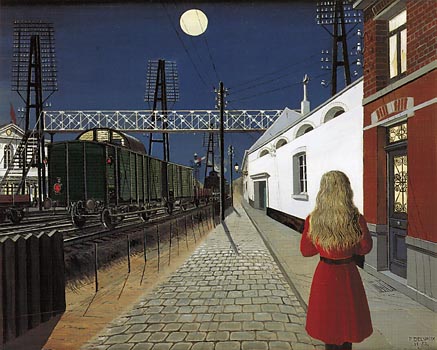
Solitude (1955)
by Paul Delvaux  (BE)


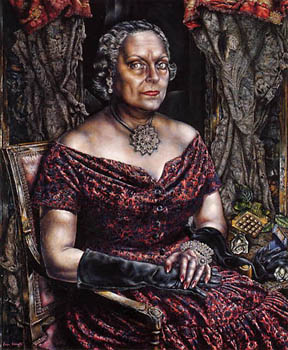
Portrait of Mary Block (1955-57)
by Ivan Albright  (US)


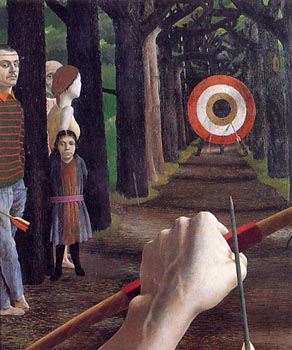
Archery Contest (c 1959)
by Pyke Koch  (NL)

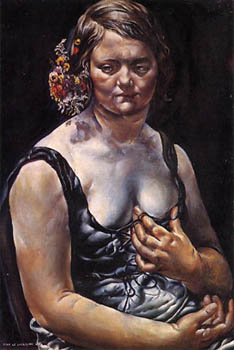
The story of Magic Realism begins with the Renaissance where the Oil and Tempera Technique was mastered in the North, allowing extreme detail. The works of Grunewald, Albrecht Duerer, Lucas Cranach, and others are studied by artists in the post WWI period.   In Italy an emphasis was placed on formal design and perspective during the Renaissance. An improved palette was developed by Venetian masters. Tonal controls and chiaroscuro were mastered by Baroque artists to enhance dramatic effects within paintings .     The precision of Copley's painting shocked British observers as he was self-taught. He stands as the father of American Realism . Manet can be considered the father of Modern Art . His Guitar Player could pass for a painting of the 21st Century.   Menzel's work brings the object into focus as the center of attention and suggests deeper meaning "behind" the object . Rousseau's naive style was greatly admired by many European artists, some of whom purposely incorporated naive motifs within their work. Vallotton's straightforward and sometimes banal realism in many ways served as a prelude to Magic Realism . The composition of Casorati's work is informed by Classical art . From this point on, developments in Italian art would profoundly impact German art .   No other artist of the 20th Century would have more impact on Magic Realism than Giorgio de Chirico. Severini moved from Futurism to a neo Classical style. His work is typical of the Return to Order trend that would influence European art for a decade.   Davringhausen Kanoldt and Mense, together with Georg Schrimpf, formed a core group of Magic Realists in Munich . Their work was influenced by the "Valori Plastici" magazine, covering contemporary Italian art and published in Munich .   In the early 1920s, Max Beckmann moved stylistically toward Magic Realism, but then veered toward a mixture of Cubism and Expressionism . Radziwill studied the Old Masters with Otto Dix . His work was informed by German Romantic art .   Schnarenberger's early work was heavily influenced by the naive art of Henri Rousseau. In 1924 he converted to a more objective, cool and detached style. Vallotton produced a number of striking figurative, still life and landscape paintings.   Otto Dix's oeuvre was varied and diverse. He made use of the a Mixed Technique of oil glazes with tempera and moved toward a Magic Realism during the mid 1920s. Dix was a very visible artist during the 1920s and influential many of his contemporaries.   The Neue Sachlichkeit exhibition began in Hannover in June 1925 and toured Germany, spreading its concepts. Christian Schad's work is often cited as highly representative of Magic Realism, yet he lived outside Germany until the late 1920s.   George Grosz made a remarkable transformation from political caricature to naturalistic portraiture punctuated with verist detail . Peter Blume in the U.S. alternated between Magic Realism and Surrealism over the next two decades.   Troedelladen (second hand store) is a masterwork of Magic Realism, with multiple centers of interest, sharp focus and a faux naive style. Peter Blume in the U.S. alternated between Magic Realism and Surrealism over the next two decades.   More than any other Italian artist of the time, Cagnaccio di San Pietro adopted the style of Neue Sachlichkeit . Roy's painting is a example of the uncanny (Das Unheimliche), an important element in Magic Realism art .   Both Lenk and Gilles studied the Old Masters, using the Mische Technique and Egg Tempera, respectively, to achieve a strong illusion of realism . The late 1920s yielded a high tide for German Magic Realism . Grant Wood made several trips to Europe in the 1920s and was impressed by works of the Flemish and German Renaissance. He utilizes both naturalistic and naive elements in his work. The iconic American Gothic is a masterpiece of Magic Realism .   Pyke Koch and Carel Willink represent a Dutch wing of Magic Realists, their work rich in the uncanny. The trademark of Franz Radziwill's paintings is his use of dark skies to produce an eerie atmosphere.   Francois-Emile Barraud, a little known Swiss artist, produced a few notable works in the early 1930s. Berni of Argentina mixed Social Realism with touches of surrealism to produce his own strain of Magic Realism during the 1930s and 40s.       Balthus plays with perspective and proportions in an Alice in Wonderland-like portrait of Lelia Caetani. Accidente by the Spaniard Alfonso Ponce de Leon is an isolated masterwork of Magic Realism .   Guglielmi one of the most well known of the artists employed by the WPA. He manipulated color, scale and space in his socially conscience work. Stanley Spencer was the most successful British figurative artists between the Wars.   One of Balthus' early works, The Mountain depicts a hypnagogic scene set in the Alps. The figures have ambiguous relationships, yet are connected through the landscape. Nussbaum belonged to the latter part of Neue Sachlickeit, later disappeared at Auschwitz.   Frida Kahlo was actively recruited by Andre Breton, she refused to join organized Surrealism, saying "I never paint dreams or nightmares,. I paint my own reality". Many painters in Latin America during the 1940s painted as Magic Realists..   The Gray and Gold succeeds as a work of Magic Realism on several levels, including its rich detail . Painted at the time America entered World War II, storm clouds gather as the country reaches  crossroads in history.   Charles Sheeler, as the leading voice of Precisionism, is observed painting an interior, "en plein air". Precisionism is closely related to Neue Sachlichkeit, and has a long term influence on Realism in the U.S. and Canada.   Emilio Baz Viaud is perhaps the Mexican artist most influenced by developments in Magic Realism . Ben Shahn is often also  associated with the movement, along with other American Scene artists such as Philip Evergood, Peter Blume and Charles Rain.   A remarkable Magic Realism painting,  Donna con i limoni (Lady with the Lemons) represents work from the group known as the Modern Painters of Reality, from the late 1940s. Jesus Guerroro Galvin mixed an tradfitional approach with a Mexican spirit.   Paul Cadmus frequently found himself in storms of controversy, as he pushed the boundaries of social commentary to their very limits. The early work of Lucien Freud was influenced by countryman Stanley Spencer. Later the magic in his art was lost.   Perhaps no other artist than George Tooker in America is more frequently associated with Magic Realism . Jared French, along with Paul Cadmus and Tooker, represent a triumvirate of  Magic Realists championed by promotor Lincoln Kirstein in the fifties.